
Search Delaware Bench Warrants
Delaware bench warrants are court orders issued by a judge when a person fails to appear in court or does not follow a court order. You can look up active bench warrants in Delaware through the online DELJIS Wanted Person Review portal. A simple name search shows warrants issued by any Delaware court across New Castle, Kent, and Sussex Counties. This page points you to the free public tools used statewide. Find where to look, what each system shows, and which office to call. Check your own status or look up a warrant on file in minutes.
Delaware Bench Warrants Overview
Where to Search Delaware Bench Warrants
The state's central tool for looking up a bench warrant is the Delaware Criminal Justice Information System, known as DELJIS. The public side of DELJIS lets anyone search by last name to see if the courts of Delaware have issued an active warrant or capias. You can run the search for free at the DELJIS Wanted Persons portal. The database covers all three Delaware counties and most court levels.
Below is a shot of the DELJIS search page. You can find it by visiting the Delaware Wanted Persons lookup.
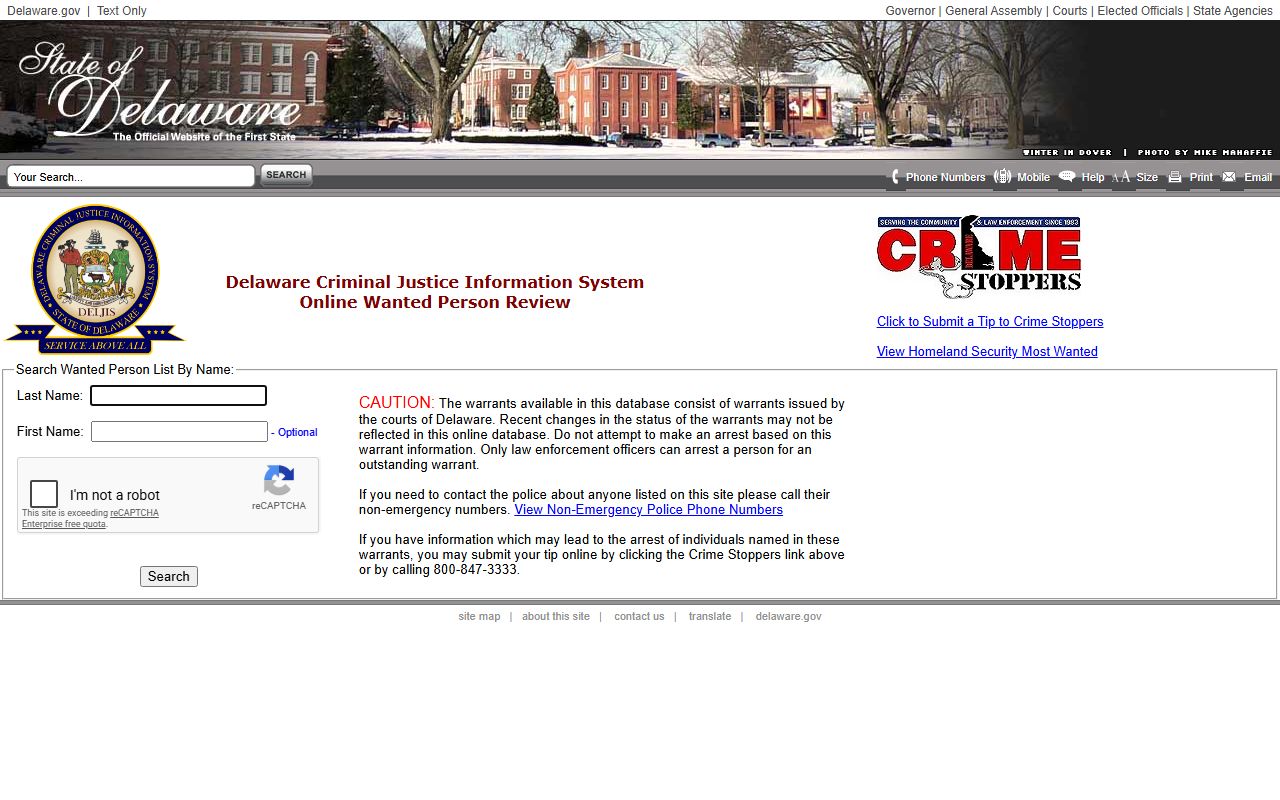
The page asks for your last name and first name. Results list active bench warrants held by the courts of Delaware. The site notes that recent updates may not show right away.
DELJIS was set up in 1983 and was the first state to link all court, jail, and police records into one system. The agency runs the back-end used by police for warrant data entry. The public portal is a read-only slice of that bigger tool. To learn how the system works, visit the DELJIS home page.
The Delaware State Police also point folks to the online bench warrant tool. DSP recommends a self-check so you have a chance to turn yourself in on your own terms. A warrant allows any sworn officer to take you into custody on sight. You can read their advice on the DSP warrant check page.
Note: The Delaware bench warrants shown on DELJIS are subject to change, so call the issuing court to confirm status before making any decisions.
How to Find Delaware Bench Warrants Online
The search is simple. Open the DELJIS Wanted Person Review tool. Type in the last name. Add the first name if you want to narrow results. Click the search button. The list that comes back shows active bench warrants and capiases issued by Delaware courts.
Each row shows the subject's name, the type of warrant, the issuing court, and a brief note on the charge. The tool will not show full police reports or the actual warrant document. Use it only as a first check. For the full case file, you need to go to the clerk of the court that issued the bench warrant or capias. Each Delaware warrant search includes statewide data pulled from the DELJIS central database.
A search on the DELJIS site needs just a few pieces of info:
- Last name of the person you want to check
- First name, if you want a tighter match
- A connection to Delaware, since the tool only shows state warrants
Below is a look at the DELJIS home page where you can learn about the full system. Start at the DELJIS homepage.
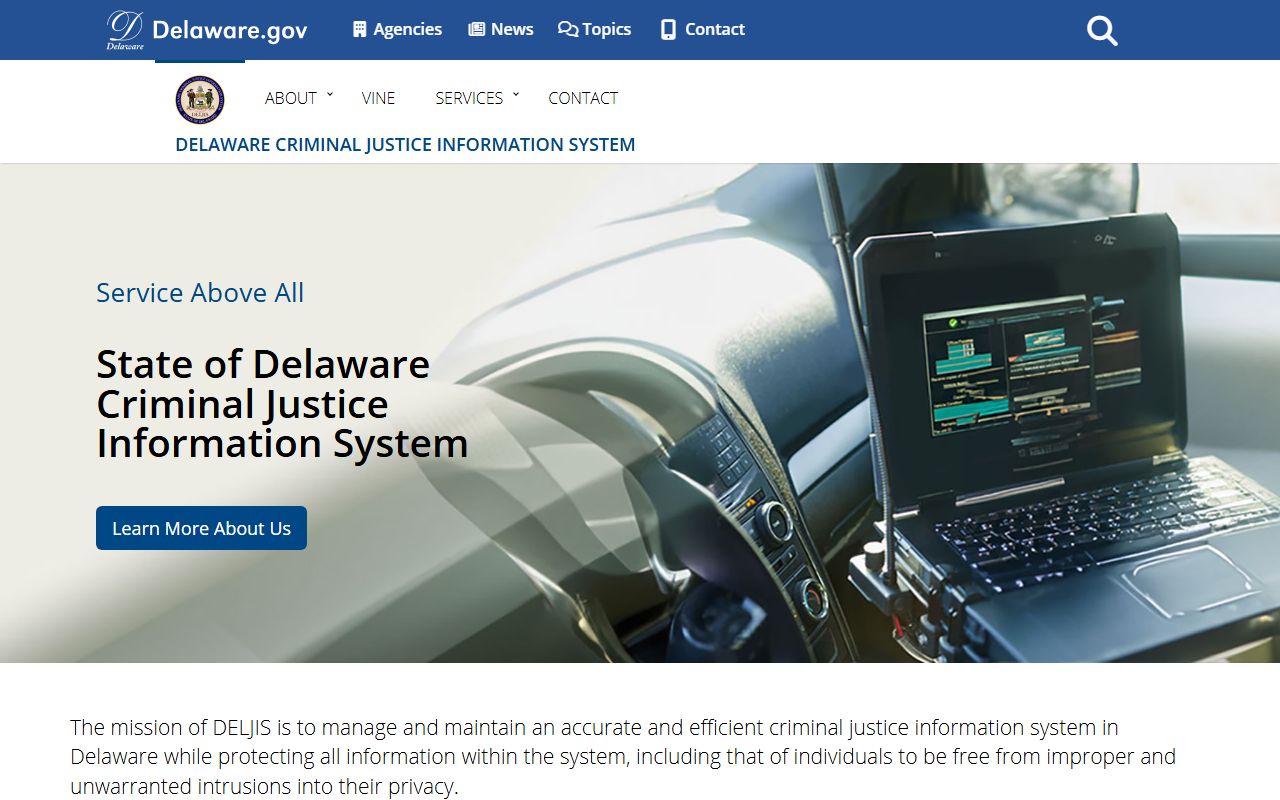
The page covers the history of DELJIS and the many records it holds. It also lists the other criminal justice systems linked to the state warrant hub.
Beyond DELJIS, the Delaware State Police publishes a public safety portal with links to wanted persons, crime mapping, and victim services. The portal notes that active bench warrants come from the courts of Delaware and are enforced by sworn officers across the state. See more on the Keeping Delaware Safe page.
Here is a shot of the DSP public safety portal. You can find it at the DSP keep Delaware safe page.
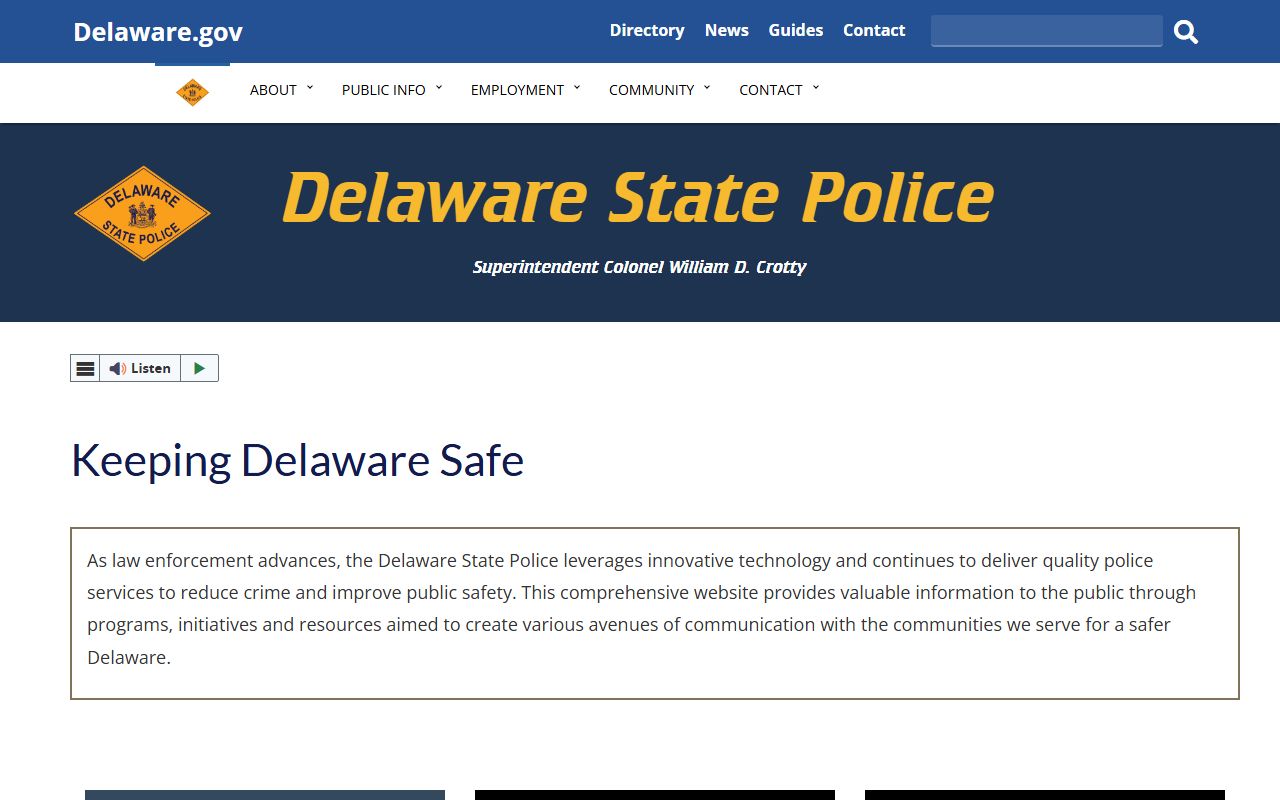
The site groups state tools by topic. Warrant check, crime stoppers, and sex offender registry each have their own click-through.
Types of Delaware Bench Warrants and Related Orders
Delaware courts issue several kinds of warrants. A bench warrant comes straight from the judge. It orders police to bring a named person into court. Most bench warrants are issued for failure to appear, contempt, or failure to follow a prior order. They stay in force until the person is arrested, turns themselves in, or a judge recalls them.
A capias is close to a bench warrant but often comes from a clerk under a judge's standing order. In Delaware, capiases are common for failure to pay fines, skipping a probation check-in, or missing a status hearing. The DELJIS public tool shows both bench warrants and capiases in its results.
An arrest warrant is a separate kind of order. Police apply for it based on probable cause. A judge reviews the application and signs if the facts support a charge. Arrest warrants are the route used when a new criminal case starts before anyone has been taken into custody. A search warrant, by contrast, lets police look for things and people at a named address.
The main kinds of orders that show up in Delaware warrant searches include:
- Bench warrants for failure to appear in court
- Capias warrants for contempt or missed hearings
- Arrest warrants backed by a sworn police affidavit
- Search warrants for homes, cars, or other places
- Body attachments in civil and family cases
Delaware was one of the first states to run an eWarrant system. Police file the request online, a judge reviews by video, and the signed warrant comes back as a PDF. DUI blood draw warrants move through the eWarrant tool in 8 to 10 minutes on average. Faster turnaround means fewer delays when time is tight.
Delaware Bench Warrants Laws and Rules
The core law on arrest and warrants sits in Delaware Code Title 11, Chapter 19. This chapter lays out when a peace officer can make an arrest with or without a warrant. Section 1904 covers warrantless arrest for felonies and misdemeanors. Section 1906 covers the rules around holding or showing the warrant.
Below is a screen capture of Title 11 Chapter 19. You can read the full text at the Delaware Code Title 11 Chapter 19 page.
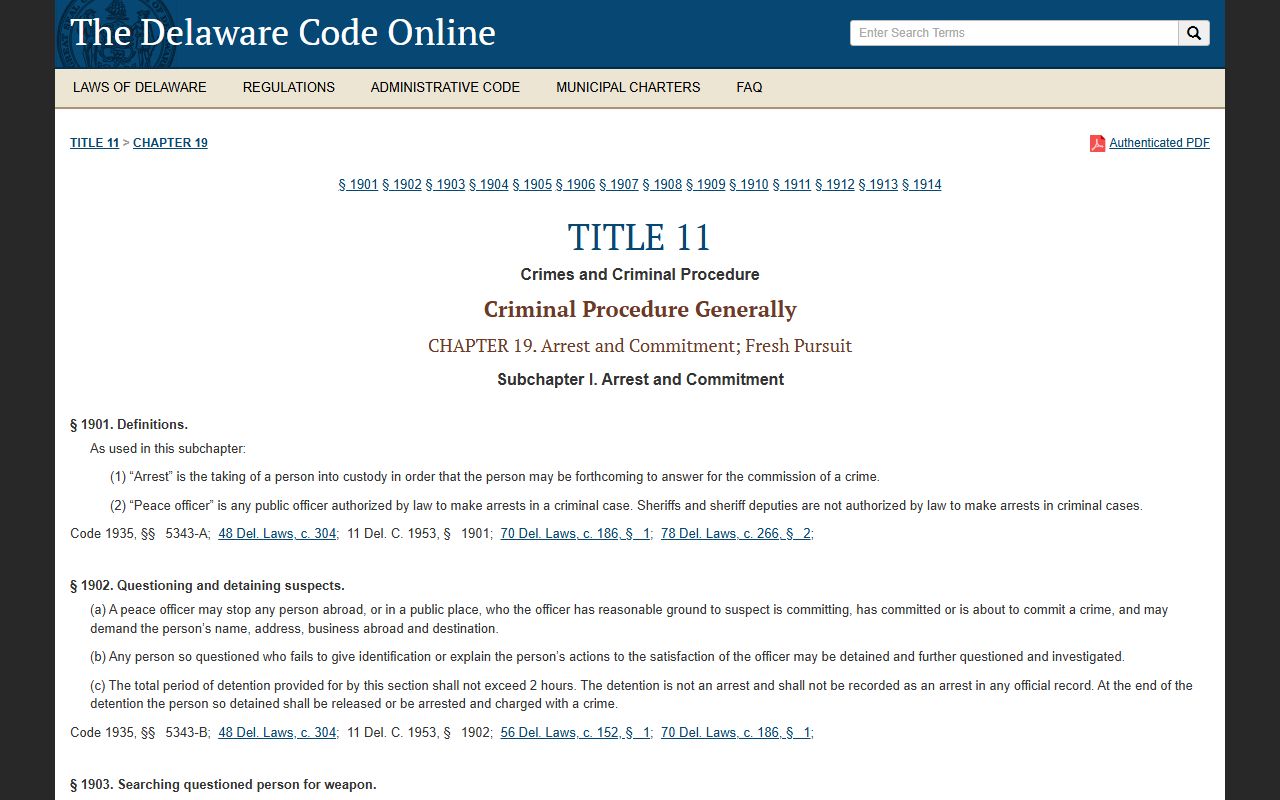
The site is an official version of state law. It loads each section on a single page and links back to related chapters.
Search warrants are governed by Delaware Code Title 11, Chapter 23. Section 2304 says a Superior Court judge, a Court of Common Pleas judge, or a magistrate may issue a warrant to search a person, home, car, or place. Section 2306 lists the application rules. The officer must swear to the facts. The warrant must name the place and the items sought. Section 2308 sets a ten-day deadline to execute any search warrant.
Here is a look at Title 11 Chapter 23 on search and seizure. The full text is on the Delaware Code Title 11 Chapter 23 page.
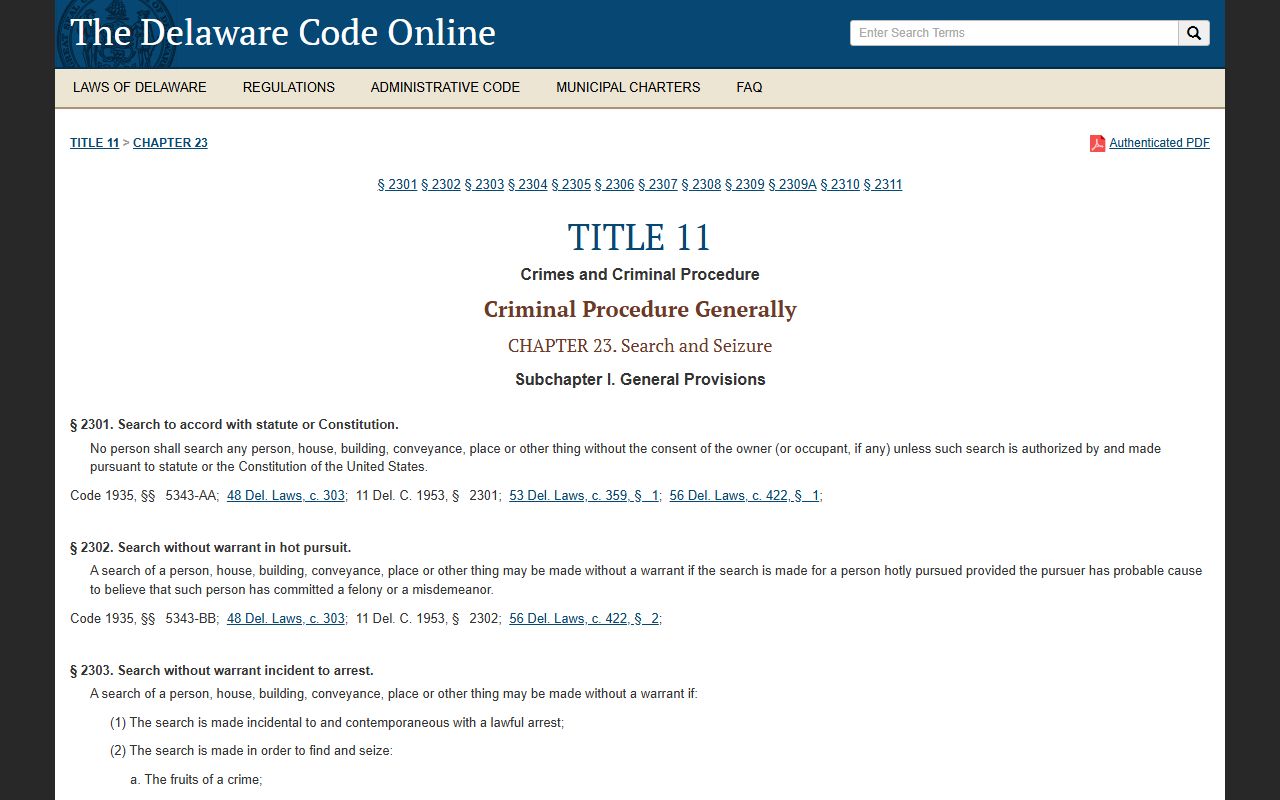
The chapter also limits when search warrants can be served at night. Most must run between 6 a.m. and 10 p.m.
Public access to records flows from Delaware FOIA at Title 29, Chapter 100. Under FOIA, executed warrants and return sheets are open records. Active warrants in open cases often stay shielded to protect flight risk. Once a warrant is served and filed with the court, it usually becomes part of the public case file. A judge may seal items for cause.
Note: Delaware bench warrants remain in force until the court recalls them, so check the status of any old case before travel or a job background search.
Delaware Court System and Bench Warrants
The Delaware courts keep warrant records in the case files held by each court clerk. The Superior Court handles felony cases. The Court of Common Pleas handles misdemeanor cases. The Justice of the Peace Courts hear minor charges and some civil claims. Each can issue bench warrants when a defendant skips court.
Civil docket data is online through CourtConnect. You can search by party name, business name, or case type and pull a docket report. While CourtConnect focuses on civil cases, the results sometimes flag outstanding orders tied to the case. Criminal docket details may show up based on the court and case type.
Below is a look at the CourtConnect portal. Try it at the Delaware CourtConnect site.
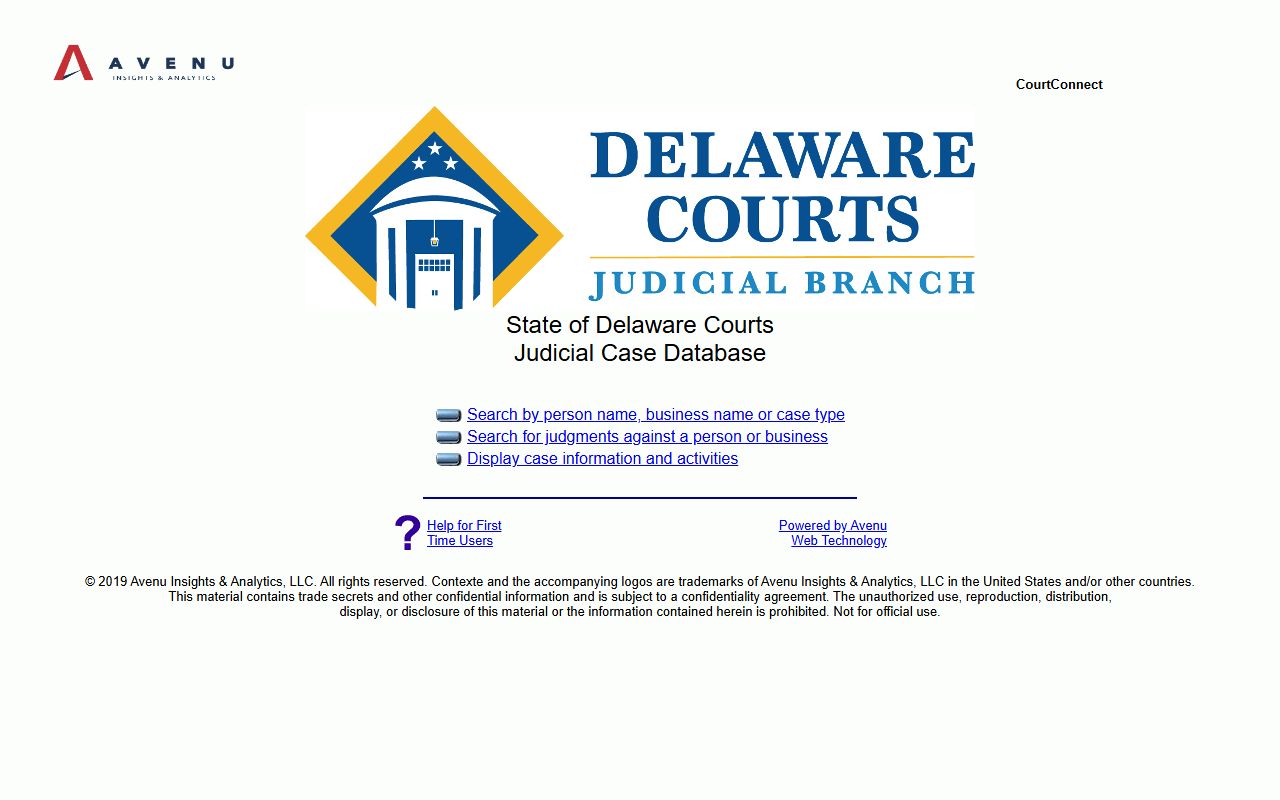
The tool is free and open around the clock. Search results link out to full docket reports on record with the court.
For hands-on access, every courthouse has a public terminal in the lobby. Staff can help you pull a case file. You can also request copies for a fee. Each county has its own Superior Court clerk, Court of Common Pleas clerk, and Justice of the Peace courts. The three county courthouses sit in Wilmington, Dover, and Georgetown.
Federal Warrants and Delaware Bench Warrants
Federal cases run through the U.S. District Court for the District of Delaware. Case files live on PACER. PACER is the federal online portal for dockets and filings from district, bankruptcy, and appeals courts. You need a free account to log in. Most pages cost a small per-page fee. The court sits at the J. Caleb Boggs Federal Building, 844 N. King Street, Wilmington, DE 19801, phone (302) 573-6170.
Here is a shot of the PACER login page for Delaware federal court. Try it at the Delaware federal PACER page.
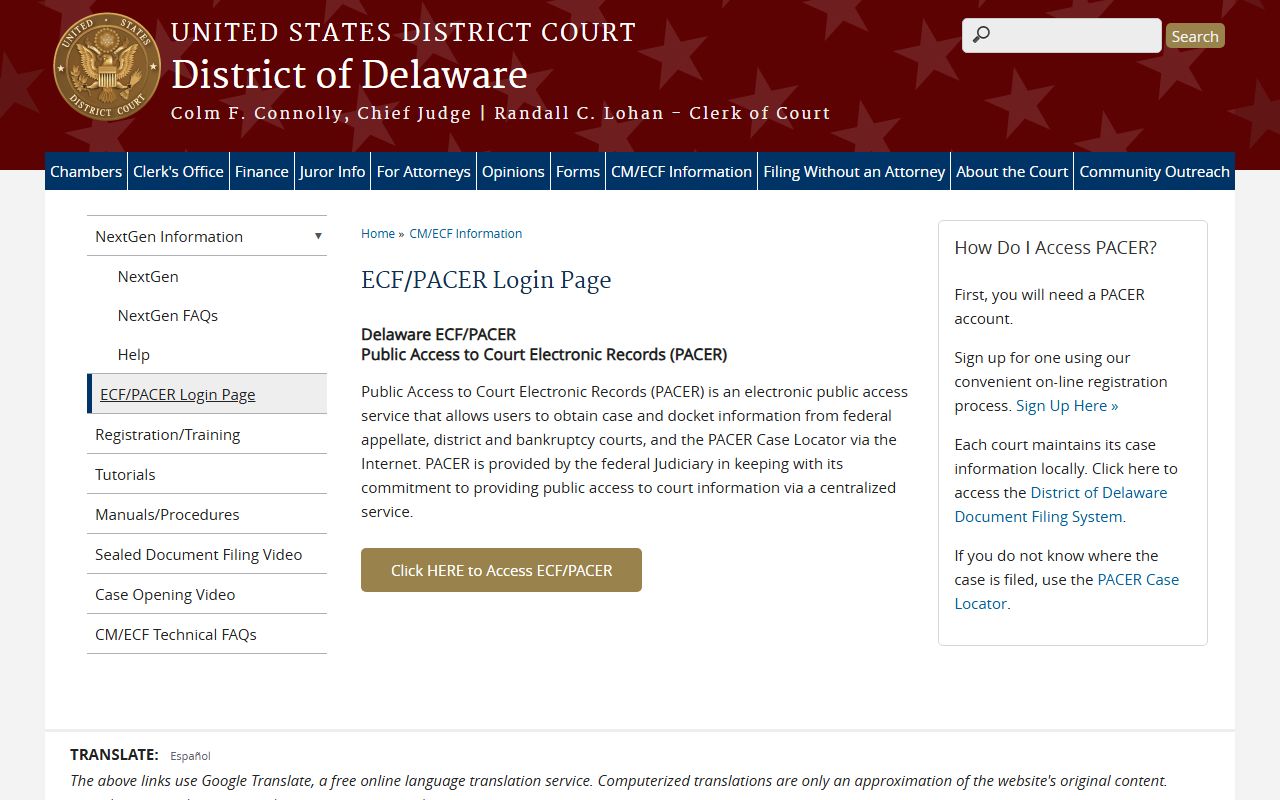
Access is tied to your PACER ID. Fees are billed per quarter and waived for low use.
The U.S. Marshals Service handles federal warrants inside Delaware. The Marshals office is at 844 King Street, Suite 4301, Wilmington, phone (302) 573-6176. They work with state and local police on fugitive cases. The regional task force led from Philadelphia often helps chase fugitives who cross into Delaware.
Federal warrants are separate from state bench warrants. A DELJIS check will not show a federal order. A PACER search picks up public federal dockets, but some warrant detail stays sealed while the case is active.
Public Access to Delaware Bench Warrants
Delaware treats most court records as public. The Delaware Freedom of Information Act sits in Title 29, Chapter 100 of the state code. The law says citizens have a right to inspect public records held by state and local bodies. A formal written request is the standard route for older or mixed record sets.
Below is the Title 29 Chapter 100 page on the official state code site. See it at the Delaware FOIA statute page.
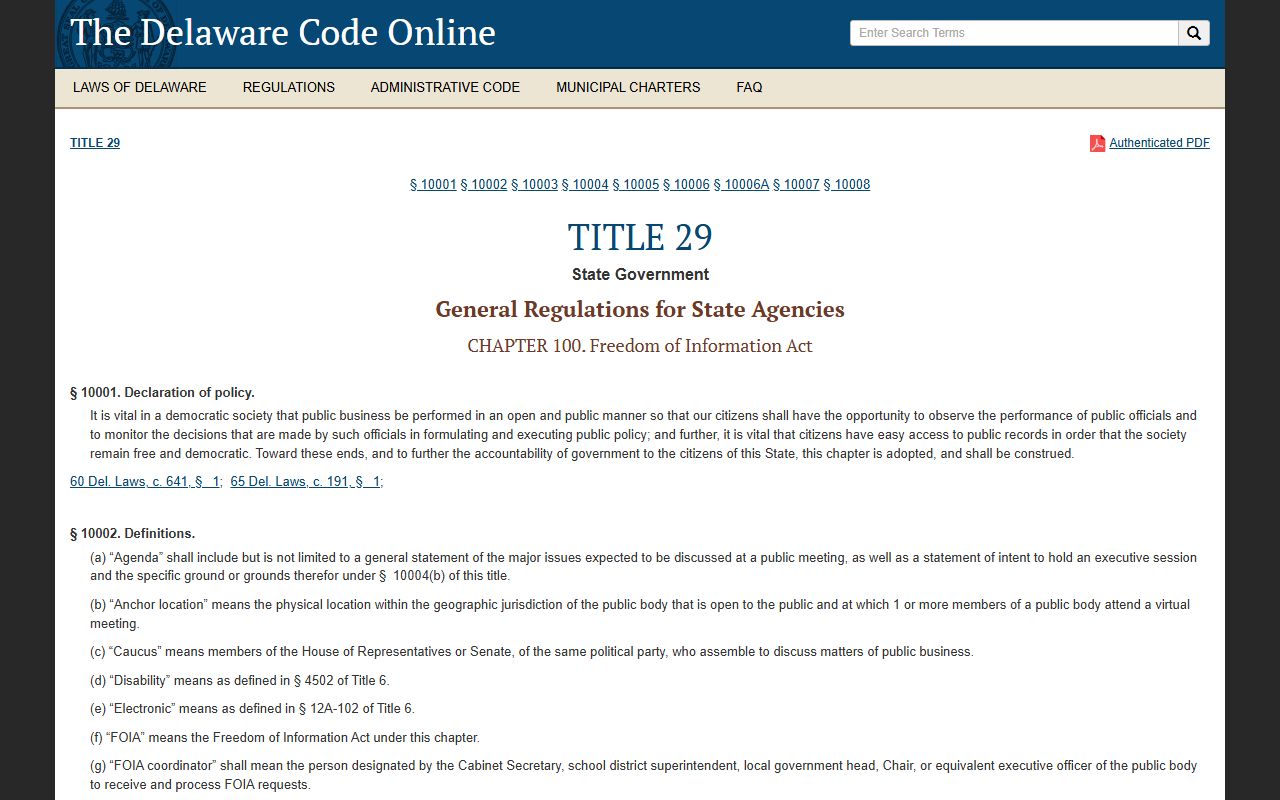
The site groups the FOIA sections in order. Each has its own link for quick reading.
Active bench warrants in open cases can be shielded. The law carves out records that would tip off flight, hurt a fair trial, or risk safety. Once the warrant is served and returned to court, the paperwork usually joins the public file. Sealed orders stay sealed unless a judge lifts the seal.
Resolving Delaware Bench Warrants
If you find an active bench warrant, do not wait. A self-surrender is almost always easier than an arrest in the middle of the night. Hire a lawyer first if you can. The lawyer may call the court clerk and ask for a warrant recall hearing. Many courts let the person post bond and set a new date rather than sit in jail.
The Delaware Department of Justice runs a 24-hour warrant hotline at (302) 577-8500. The line gives automated info on warrant status. The Attorney General's office also reviews warrant applications and guides local prosecutors on charging choices tied to warrants.
Delaware has run periodic Safe Surrender events. Under Delaware Supreme Court Administrative Directive 2018-5, a person with an old bench warrant can come in, clear the warrant, and leave the same day in most cases. The court pairs the event with the Public Defender so folks get legal advice on the spot. Safe Surrender events run in coordination with local sheriff offices and the DOJ.
The Office of Defense Services provides a lawyer to those who cannot afford one. The main office sits at the Carvel State Office Building at 820 N. French Street, 3rd Floor, Wilmington, DE 19801, phone (302) 577-5160. Public Defenders handle cases that involve bench warrants, bail review, and warrant recall hearings.
Delaware Warrant Systems Behind the Scenes
Police and the courts share data through several linked tools. The Automated Warrant and Arrest System logs new warrants into DELJIS. The Justice of the Peace Case Management tool tracks minor cases from intake through payment. The Law File gives officers quick access to every charge listed in the code.
The DELJIS back office is described on its systems overview page. The agency keeps the Wanted Persons File, mug shots, DMV photos, and statutory references linked in one hub. Police can pull a person's full charge summary from their patrol car.
See the DELJIS systems page below. More detail is on the DELJIS systems overview.
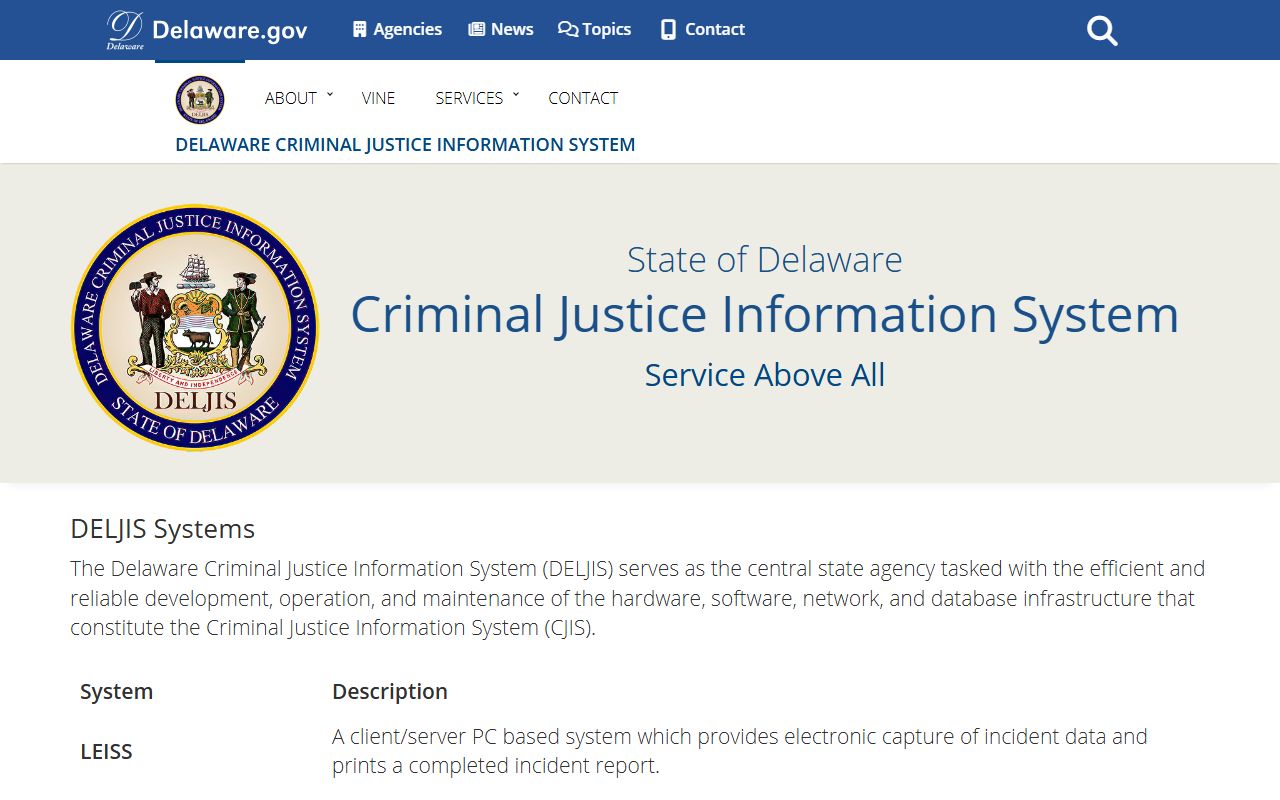
The page lists each module by name. A click opens a short description of what each tool does.
Here is the DSP warrant check info page that sends people to the public lookup. Visit it at the DSP warrant check info page.
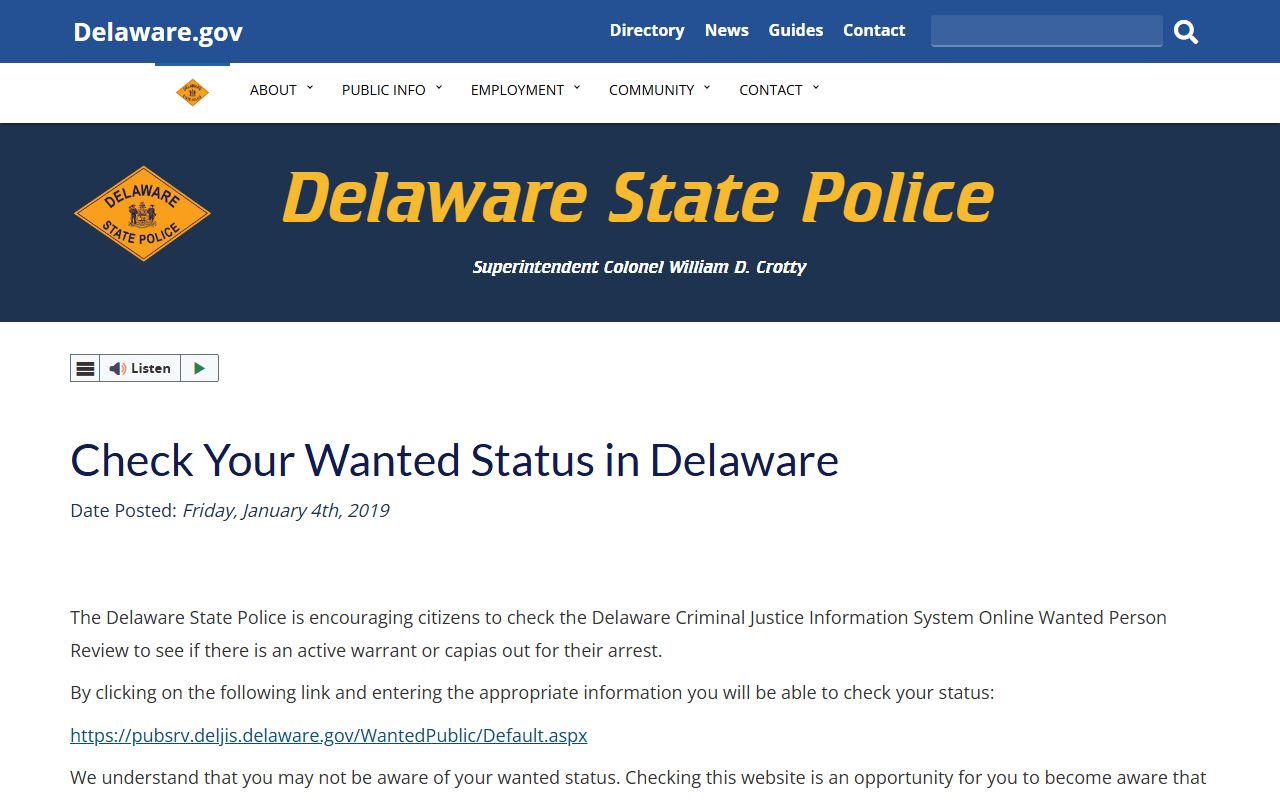
The post ends with phone numbers for every DSP Troop. You can call the closest one to ask what to do next.
Browse Delaware Bench Warrants by County
Delaware has three counties. Each has its own sheriff, Superior Court, Court of Common Pleas, and Justice of the Peace courts. Pick a county below to find local contact info, bench warrant resources, and the court clerk who holds the case file.
Delaware Bench Warrants in Major Cities
The list below covers the main cities in Delaware with active police departments and municipal courts. Pick a city to find local warrant resources and learn which county court handles cases there.